Meet Milton Gilder

The Rev. Milton Gilder, Deacon
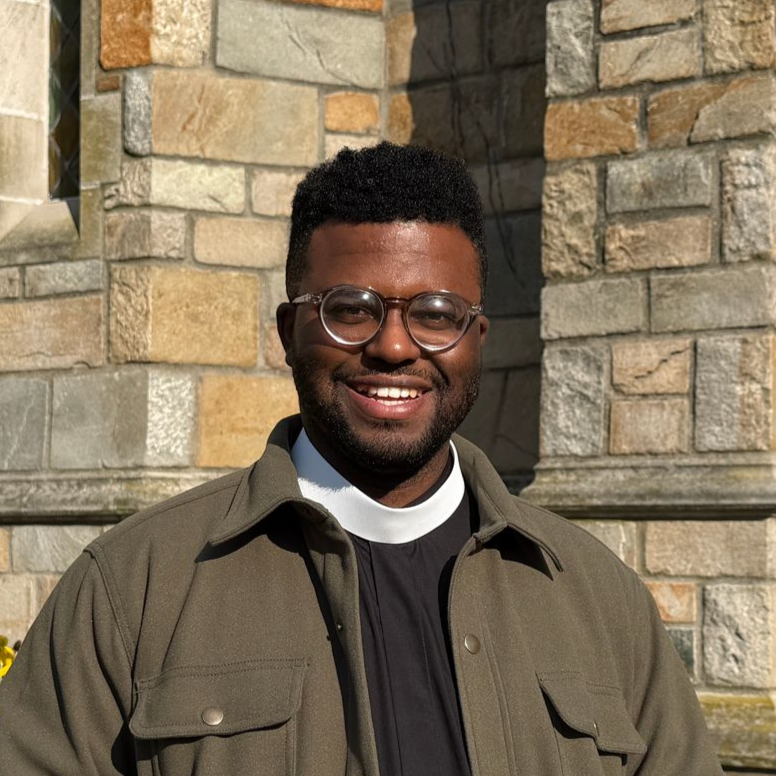
Greetings, Saint Paul's,


I am Milton Gilder, and I look forward to joining Saint Paul's Norwalk as a curate and assistant priest for the next two years! I am grateful and excited that this community has welcomed me with open arms to walk with you all in your good and divine work of ministry in Norwalk. Let's see what holy mischief God might have us to be and to do!


I am originally from Long Beach, California. I grew up around parents and grandparents and great-grandparents who were active in their local communities and churches as ushers, choir members, food pantry volunteers, interfaith and community organizers, and lent their construction talents to help rebuild the church after two catastrophic fires.


It's no surprise that my career and extracurriculars from childhood to now as an adult have always centered around the church and community. As a teenager, I served on a youth philanthropy board that gave grants to youth-led programs and volunteered at the library as a data analyst, tabulating numbers and creating charts on the library's reading programs. As a young college student at Duke University, I would quickly get involved in my college paper as a photographer and in a campus ministry, serving on the community events, prayer, and prison ministry teams. In my post-college years, I have lived in several Christian intentional communities, sharing what we had in common with our neighbors, committing to daily prayer and regular retreats. 


Before moving to Connecticut for divinity school, I chiefly worked in diverse functions in education, youth development, and ministry. Immediately prior to Yale, I worked at Teachers Pay Teachers, an education technology company, working with internal stakeholders on sales and product marketing strategy. Before transitioning to education technology, I  spent several years in secondary education and Christian youth leadership development. Most recently at Duke Divinity School, I directed the Duke Youth Academy, a year-long ecumenical youth leadership and service learning program that expanded young people’s imagination and service in the church and beyond. I was the last Director and was responsible for facilitating its closure in my final year there. Previously, I launched a career and college readiness program at a Christian parachurch organization in Walltown - a historic Black and Brown neighborhood in Durham, North Carolina. 


At Berkeley Divinity School at Yale, I explored my passions for sustaining institutions and communities by serving on various student boards and clubs, including but not limited to the Divinnovation Club, a faith and innovation club; Pennington Legacy Project, a group of students organizing at Yale for James Pennington to receive a posthumous degree to rewrite the wrongs of the past; the Yale Presidential Search Student Advisory Council; and the Yale Divinity Student Government. 


This past summer, I was recently ordained to the diaconate in The Episcopal Church in the Episcopal Church in Connecticut. I anticipate ordination, God willing and people consenting, to the priesthood in January 2027.


I come to Saint Paul's with a rich background, having befriended, lived, and worked amongst the diversity of the Christian tradition and faith communities, and served a myriad of functions and roles across diverse organizations. I look forward to being among you and serving together so that Norwalk might receive Jesus Christ's radical welcome.


Milton


You might also like
By Marsha Dunn • September 16, 2025
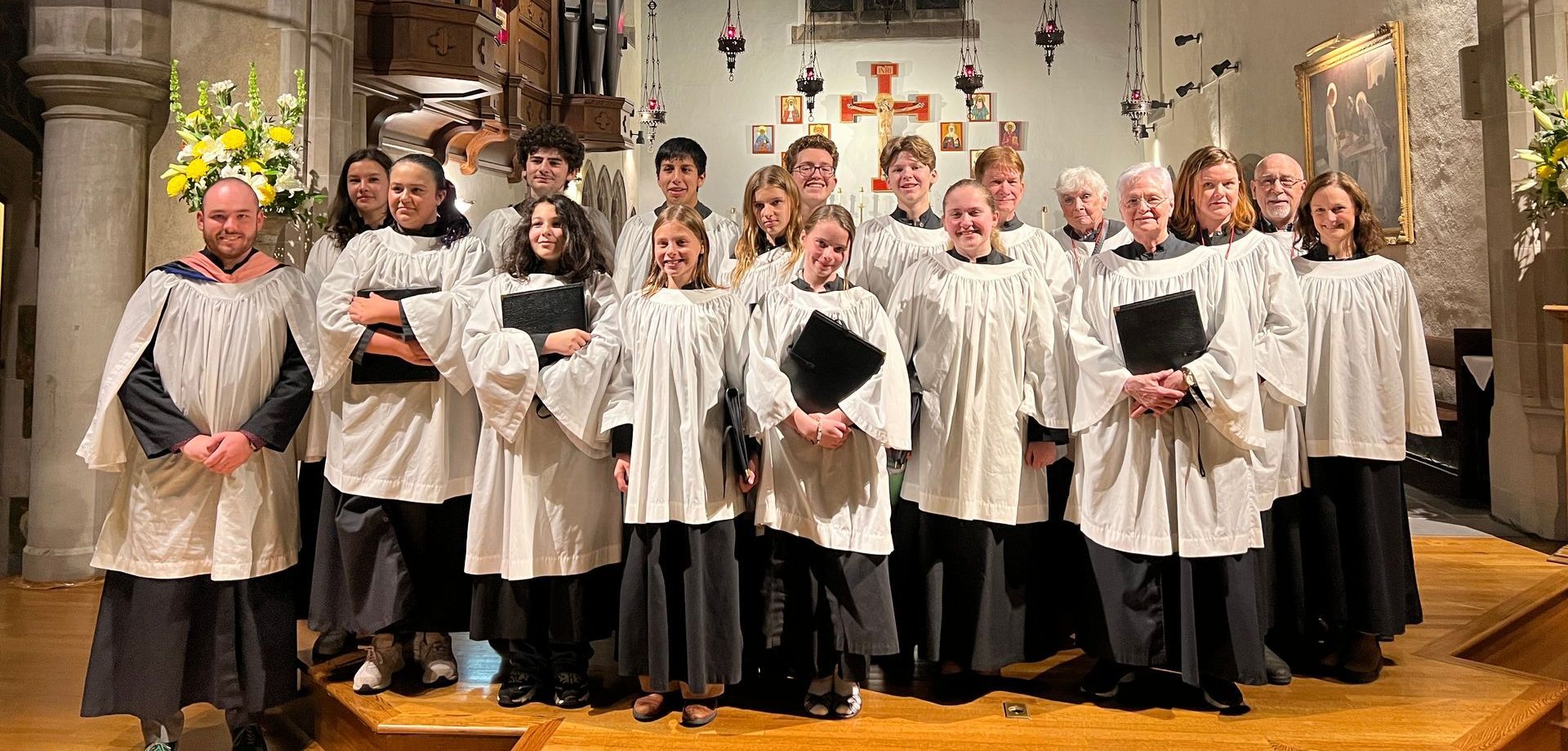
Music at St. Paul's Choirs Adult volunteers and the St. Paul’s Choristers and Choral Scholars come together to lead the hymns and anthems at worship each Sunday. The choirs also participate in concerts, special services such as Evensong, and other events throughout the year. The Compline Choir (separate upper and lower voices choirs) sings chant and polyphony every Sunday night for the 8 PM service of Compline. St. Paul’s maintains a roster of professional singers that are called to sing special services throughout the year. St. Paul’s believes deeply in the power of congregational singing, and so our choir’s primary responsibility is to lead and inspire congregational song. Though we use the Hymnal 1982 as our primary musical resource, we frequently draw from other sources as well. Organ Our 1928 E.M. Skinner organ was installed and enlarged in 1992, and was restored and enlarged in 2007 by the Reuter Organ Company of Lawrence, Kansas. Seasonal recitals featuring talented organists are offered during the year. Visit the Events Calendar for updates. Read more, and see the organ’s specifications. St. Paul’s Chorister Program The St. Paul’s Chorister Program, is open to all children in grades 2 – 8. The Choristers meet weekly to rehearse and sing with the Schola Choir bi-monthly at the 11 am service. Rehearsals incorporate supplemental music education and fun! The program is free to all students and you do not need to be a member of St. Paul’s (or any church!) to participate. St. Paul’s Choral Scholars Program The Choristers are supported by Choral Scholars, high school aged students who often are pursuing musical careers of their own. This program offers an exposure to a wide variety of choral repertoire, and develops skills in sight reading and leadership. A honorarium is available to Scholars. If you would like more information about music and arts programs at St. Paul’s or would be interested in joining the choir contact Josh Ehlebracht at music@stpaulsnorwalk.org .
By Marsha Dunn • August 11, 2025
Art with Heart 1st & 3rd Saturday of the Month at 10 am Explore spirituality through art! No experience needed—just bring your creativity and an open heart! Everyone from preteens to adults is welcome to join the fun! Supplies are provided, or bring your favorite medium.
By Gail Bindley-Taylor • June 2, 2025
June 19th is the day in 1865 in Galveston, Texas when a Union general rode in to inform the city that the institution of slavery had ended and that all enslaved people were from that moment, free. This should not have been a surprise to the enslaved African Americans of Texas since President Lincoln had in fact already issued a proclamation two years earlier, on Jan 1, 1863 liberating all enslaved persons living in Confederate states. But the order carried little weight in Texas, where there were few Union soldiers to enforce it, and where, according to Annette Gordon-Reed in her book “On Juneteenth,” despite the formal surrender of the Confederate General Robert E. Lee two months earlier, the Confederate army continued fighting until mid -May. Many of the enslaved persons in that state therefore continued working for their enslavers, but others we are told by Annette Gordon-Reed “knew the gist of the general order prior to June 19, as Galveston, the largest city in Texas was a port city through which most of the cotton picked and processed in the state was shipped out to the world.” And she stresses, “port cities are prefect vehicles for transmission of information to people of all degrees of literacy.” Ms. Gordon-Reed herself a Texan says: “Two days before General Granger arrived on the island, Black men working on the wharves began to shout in exultation. When asked what they were celebrating, they replied, because they were free.” The news began to spread to other towns but the enslaved had to be careful about openly celebrating as “White in Texas were incensed by what had transpired so much so that some reacted violently to the Blacks’ display of joy at emancipation.” Nevertheless, once the announcement was made in 1865 African Americans in Texas and elsewhere in the United States as the cultural practice spread began to celebrate the day. But though acknowledged by some 47 states and the district of Columbia it is only in 2021 that Juneteenth was made a federal holiday in the United States commemorating the emancipation of enslaved African Americans. St. Paul's Juneteenth Celebration has become a major event in the life of the Parish. As part of past celebrations, we honor the rich traditions that have long been associated with Juneteenth gatherings. Food has always been central to these celebrations, bringing families and communities together around shared tables. Everyone was invited to bring a favorite dish from their own family or cultural tradition to share, as we celebrate both our diversity and our common humanity. Traditional Juneteenth foods and beverages often feature red ingredients and drinks—such as strawberry soda, hibiscus tea, red velvet cake, or watermelon—which symbolize resilience, sacrifice, and the strength of those who endured slavery and passed on a legacy of perseverance and freedom.